"DO NOT...I REPEAT DO NOT ENROLL AT FRANKLIN UNIVERSITY....My experience was terrible. Working with their business office or financial aid department is a level of toxic you do not want to experience. The staff is not competent at their job duties. Non- communicative and condescending is what you can expect in terms of enrollment and throughout the duration of your time there. They are truly focused on profits and not the success of their students. You've been warned. Tread carefully."
Forensic scientists collect, preserve, and analyze evidence during the course of an investigation. While some forensic scientists travel to the scene of the crime to collect the evidence themselves, others occupy a laboratory role, performing analysis on objects brought to them by other individuals. [3]
The noun forensic, meaning “an argumentative exercise” derives from the adjective forensic, whose earliest meaning in English is “belonging to, used in, or suitable to courts or to public discussion and debate.”
Forensic science comprises a diverse array of disciplines, from fingerprint and DNA analysis to the analysis of synthetic opioids and digital evidence. Forensic science plays a crucial role in our criminal justice system.
Forensic scientists are crime solvers who use chemical and biological technologies to analyze the evidence they collect. They document their findings with photographs and drawings and reconstruct...
Forensic science serves as a bridge between scientific discovery and the legal system, providing objective analysis for justice. It applies scientific principles and methods to examine physical evidence. This interdisciplinary field resolves legal questions in criminal and civil cases.
Forensic science is the application of scientific methods to criminal and civil investigations, involving multiple disciplines from DNA analysis to digital forensics. Professionals in this field earn a median salary of $67,440 annually while helping solve crimes through scientific evidence analysis. What is Forensic Science?
Discover the historical development of forensic science and its impact on criminal investigations. Explore the scope of forensic science and its subdomains, such as DNA analysis, fingerprint analysis, ballistics, toxicology, digital forensics, and more.
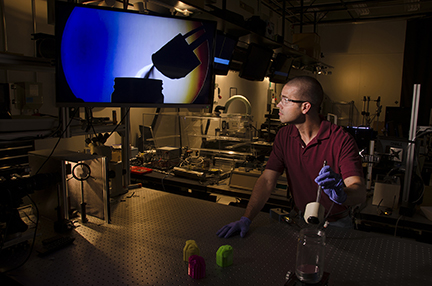 Forensic science comprises a diverse array of disciplines, from fingerprint and DNA analysis to the analysis of synthetic opioids and digital evidence. Forensic science plays a crucial role in our criminal justice system.